



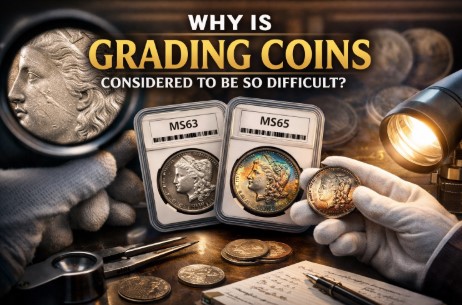
Why Is Grading Coins Considered to Be So Difficult?
Coin grading is the backbone of the numismatic marketplace. The difference between a coin graded MS-63 and MS-65 can mean hundreds—or even thousands—of dollars in value. Yet despite decades of standardization and the existence of professional grading services like Professional Coin Grading Service (PCGS) and Numismatic Guaranty Company (NGC), grading coins remains one of the most challenging skills in the hobby.
Why is something that sounds so simple—evaluating the condition of a coin—actually so difficult? The answer lies in a combination of subjectivity, microscopic detail, experience, and market interpretation.
Below are the main reasons coin grading is considered so challenging.
1. Tiny Differences Can Mean Huge Value Changes


Unlike many collectibles, coin grading often comes down to extremely subtle differences. Two coins may look identical to a casual observer, but under magnification:
-
One may have slightly better luster
-
One may have fewer contact marks
-
One may have stronger strike detail
-
One may have cleaner fields
These tiny distinctions can push a coin from MS-63 to MS-64 or MS-65, and that small change can multiply the coin’s market value.
Professional graders are trained to see details most people would never notice.
2. Coins Were Never Made Perfect
Even when coins leave the mint, they already vary significantly.
Minting variables include:
-
Strike strength
-
Die wear
-
Planchet quality
-
Minting pressure
-
Die alignment
For example, some coins—such as Morgan Silver Dollar—are notorious for weak strikes in certain areas like the hair above Liberty’s ear or the eagle’s breast feathers.
A grader must determine:
Is the softness due to wear, or is it how the coin was originally struck?
That distinction is one of the hardest skills to master.
3. Surface Marks Are Interpreted, Not Just Counted


Many people assume grading is simply counting scratches or marks. In reality, graders must consider:
-
Location of marks
-
Severity
-
Visibility
-
Number
-
Overall eye appeal
For example:
-
A single mark on Liberty’s cheek (a focal point) can hurt the grade more than several marks in the background fields.
-
A mark that breaks luster may be more significant than a shallow abrasion.
The placement of imperfections matters as much as the imperfections themselves.
4. Lighting and Angles Change What You See
Professional graders spend years learning how to rotate a coin under light to reveal:
-
Hairline scratches
-
Luster breaks
-
Cleaning evidence
-
Subtle wear
A coin viewed flat under a desk lamp may look flawless. Tilt it under a grading lamp, and hidden problems suddenly appear.
This is why serious grading is done under controlled lighting with practiced techniques.
5. Eye Appeal Is Part of the Grade
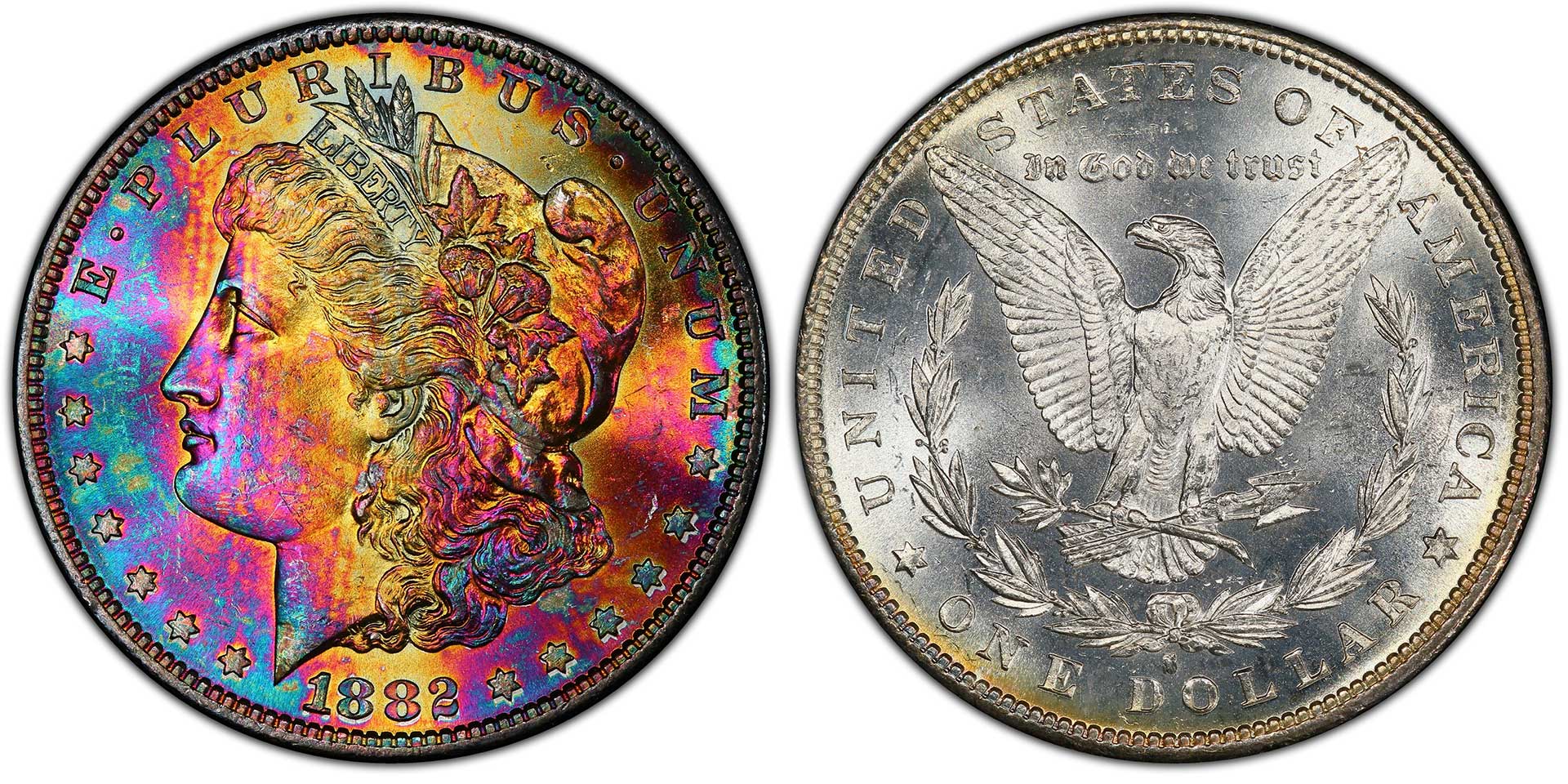


Not all grading is purely technical. Eye appeal also plays a role.
Two coins with identical technical surfaces may receive different grades because one has:
-
Beautiful natural toning
-
Bright, vibrant luster
-
Attractive color
While the other may appear dull or lifeless.
Professional graders consider the overall visual impact of the coin.
6. Experience Matters More Than Books
Anyone can read a grading guide, but true grading skill usually takes years of hands-on experience.
Seasoned dealers and graders have often examined hundreds of thousands of coins, building a mental reference library of:
-
What an MS-63 really looks like
-
What separates MS-64 from MS-65
-
What cleaning looks like under different lighting
-
What natural wear versus friction looks like
This experience is difficult to replicate quickly.
7. Even Professionals Sometimes Disagree
Even the best graders occasionally disagree on a coin’s grade.
This is why major grading services use multiple graders before assigning a final grade.
Companies such as Professional Coin Grading Service and Numismatic Guaranty Company typically use teams of graders to reach a consensus.
Despite this, coins can still:
-
Upgrade
-
Downgrade
-
Cross grades between services
This demonstrates how nuanced grading can be.
Final Thoughts
Coin grading is difficult because it combines science, art, and experience. It requires the ability to evaluate microscopic details, interpret how coins were struck, judge eye appeal, and understand market standards.
For collectors, this challenge is part of what makes numismatics so fascinating.
Learning to grade coins well is not something that happens overnight—but with time, careful study, and exposure to many examples, collectors gradually develop the trained eye needed to understand why the difference between two coins can sometimes be measured in thousands of dollars.