



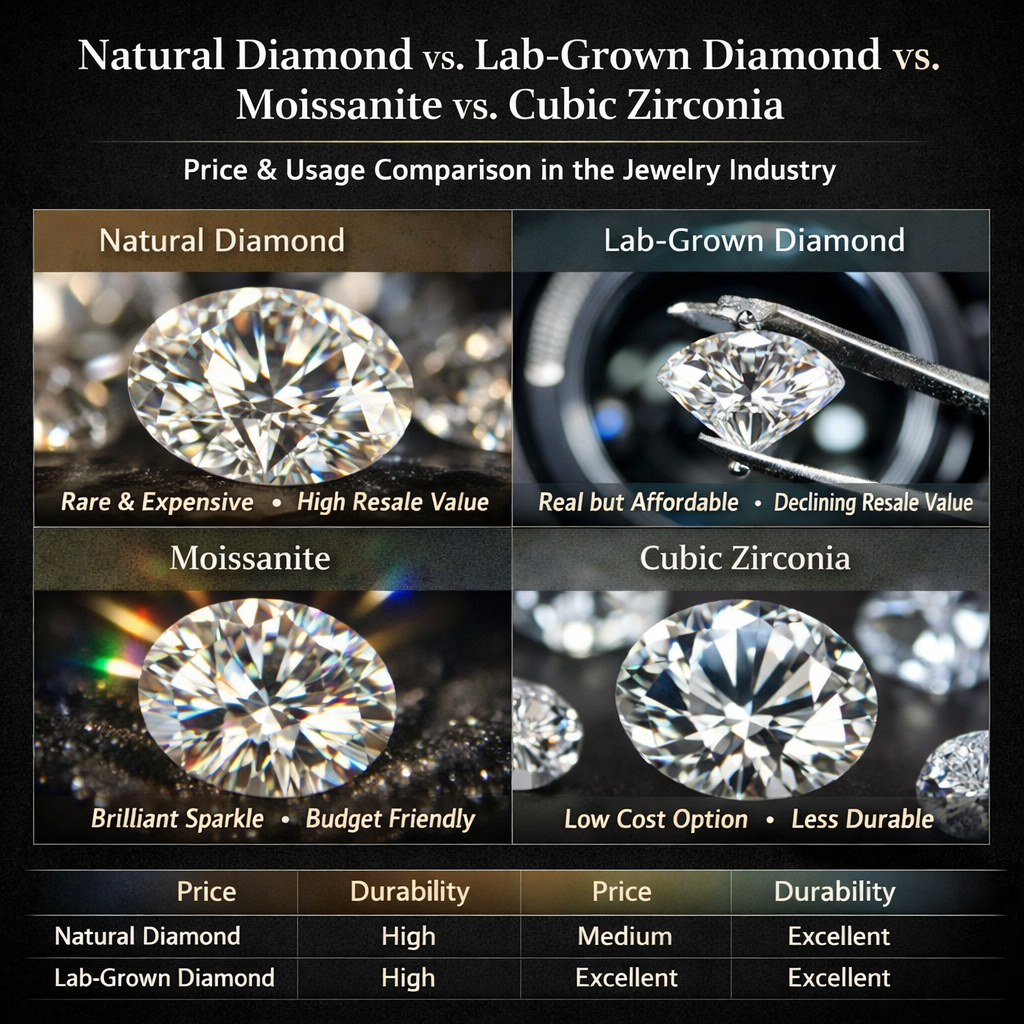
Natural vs. Lab-Grown Diamonds vs. Moissanite vs. Cubic Zirconia
Understanding Value, Pricing, and Use in Today’s Jewelry Market
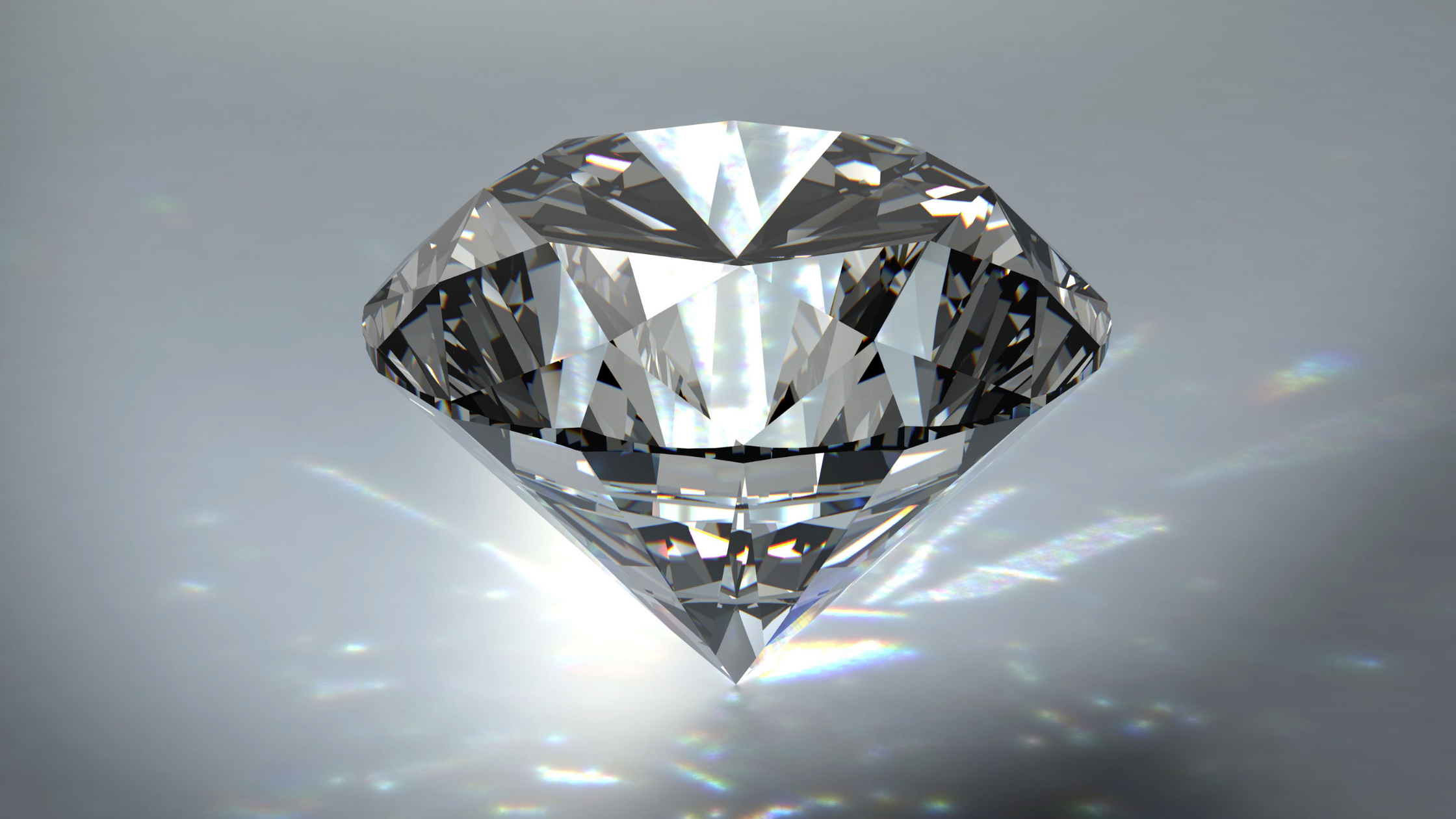
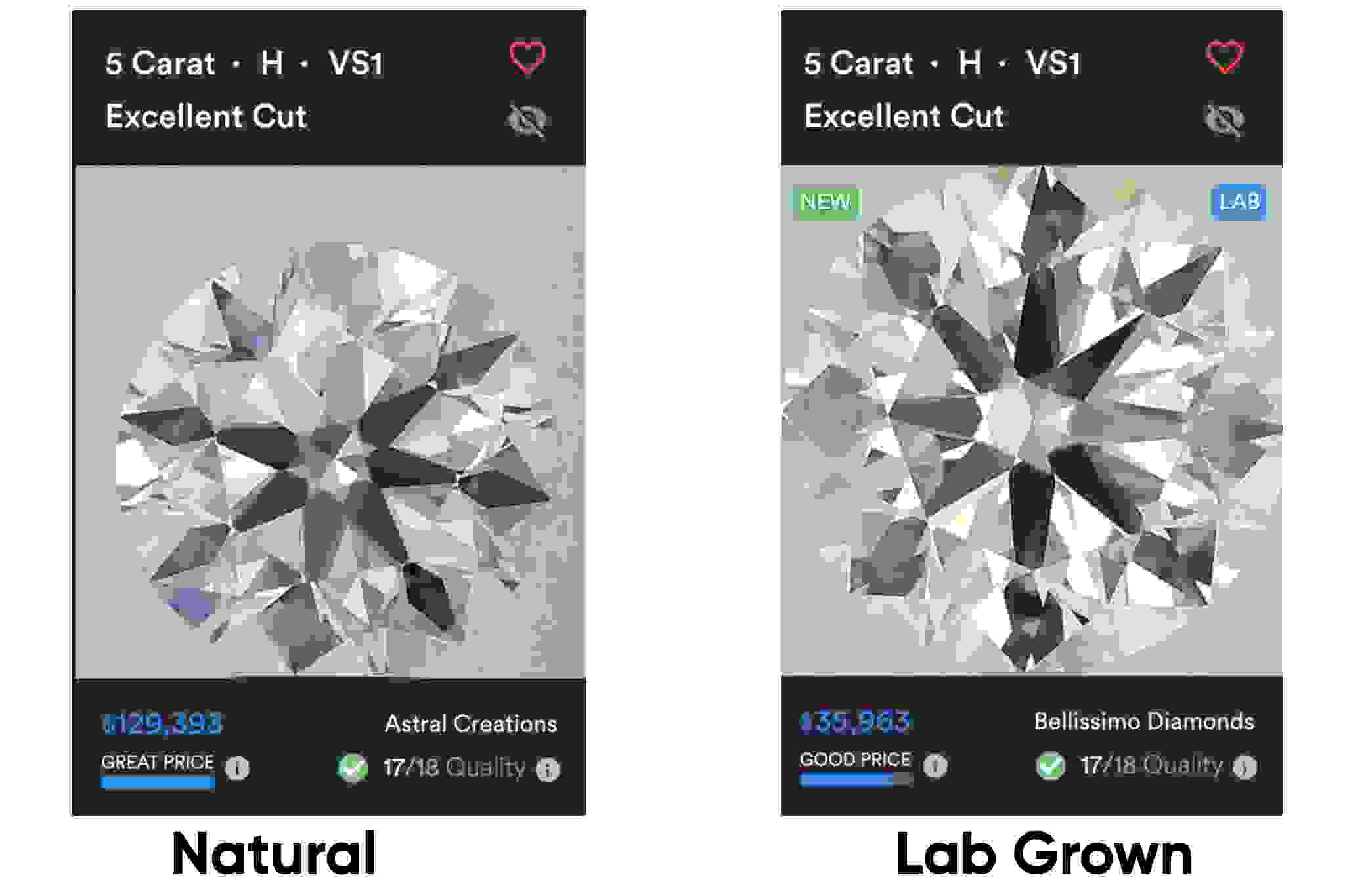

The modern jewelry market offers more choices than ever before when it comes to diamond alternatives. While they may look similar to the naked eye, natural diamonds, lab-grown diamonds, moissanite, and cubic zirconia (CZ) differ significantly in origin, durability, price, and how they’re used in the industry.
Whether you're a collector, investor, or consumer, understanding these differences is essential.
1. Natural Diamonds
The Benchmark of Value and Prestige
What they are:
Natural diamonds are formed over billions of years deep within the Earth under extreme pressure and heat.
Key Characteristics:
- Hardness: 10 (Mohs scale) – the hardest natural material
- Unique inclusions (no two are identical)
- Long-standing store of value
Price Range:
- Highest of all four options
- Prices vary widely depending on cut, clarity, color, and carat
- Investment-grade stones can appreciate over time
Industry Usage:
- Fine jewelry (engagement rings, heirloom pieces)
- High-end luxury brands
- Investment and collectible markets
Bottom Line:
Natural diamonds command a premium because of rarity, tradition, and long-term value retention.
2. Lab-Grown Diamonds
Real Diamonds, Modern Origins
What they are:
Lab-grown diamonds are chemically and physically identical to natural diamonds but created in a controlled environment using advanced technology.
Key Characteristics:
- Hardness: 10 (Mohs scale)
- Same brilliance and composition as natural diamonds
- Typically fewer inclusions
Price Range:
- 40%–70% less than natural diamonds (for comparable specs)
- Prices continue to decline as production scales
Industry Usage:
- Popular in engagement rings and fashion jewelry
- Increasing adoption by mainstream jewelers
- Less presence in investment markets
Bottom Line:
Lab-grown diamonds offer the same look and durability at a lower cost, but lack long-term resale strength.
3. Moissanite
Maximum Sparkle, Alternative Appeal
What it is:
Moissanite is a silicon carbide gemstone originally discovered in meteorites and now lab-created.
Key Characteristics:
- Hardness: 9.25 (Mohs scale)
- Higher refractive index than diamond → more “fire” (rainbow sparkle)
- Slightly different appearance under certain lighting
Price Range:
- ~10%–20% of natural diamond pricing
- More expensive than CZ, but far cheaper than diamonds
Industry Usage:
- Popular diamond alternative for engagement rings
- Favored by buyers prioritizing sparkle and value
- Not used in investment or high-jewelry markets
Bottom Line:
Moissanite is ideal for those wanting maximum brilliance at a fraction of the cost, though it is visibly different to trained eyes.
4. Cubic Zirconia (CZ)
Affordable and Accessible
What it is:
Cubic zirconia is a synthetic crystalline material made to simulate diamonds.
Key Characteristics:
- Hardness: 8–8.5 (Mohs scale)
- Softer and more prone to scratching and clouding
- Less brilliance and durability over time
Price Range:
- Very inexpensive (often under $20–$100 per stone)
Industry Usage:
- Fashion jewelry
- Costume pieces
- Temporary or travel jewelry
Bottom Line:
CZ is a budget-friendly option, but it lacks durability and long-term appeal.
Side-by-Side Comparison
| Feature | Natural Diamond | Lab Diamond | Moissanite | Cubic Zirconia |
|---|---|---|---|---|
| Hardness | 10 | 10 | 9.25 | 8–8.5 |
| Price | Highest | Medium | Low | Very Low |
| Sparkle | Balanced | Same as natural | Very high (rainbow fire) | Moderate |
| Durability | Excellent | Excellent | Very good | Fair |
| Resale Value | Strong | Weak | Minimal | None |
| Industry Use | Fine jewelry, investment | Bridal, fashion | Alternative bridal | Costume jewelry |
Final Thoughts: Choosing the Right Stone
Your choice ultimately depends on your priorities:
- Investment & legacy: Natural diamonds
- Value with authenticity: Lab-grown diamonds
- Maximum sparkle on a budget: Moissanite
- Lowest cost option: Cubic zirconia
In today’s market, transparency is key. Understanding what you’re buying—and how it performs over time—ensures you make the right decision whether for personal enjoyment or long-term value.